Introduction to Portable Air Conditioners: What They Are and Why They’re Popular
Portable air conditioners are compact cooling devices designed to provide effective temperature control in limited spaces. They work by drawing in warm air from the environment, cooling it, and then circulating the cooled air back into the room. Unlike traditional air conditioning systems that require extensive installation, portable units are generally easy to set up and can be moved from room to room, making them a versatile cooling solution.
The increasing popularity of portable air conditioners can be attributed to several factors. First and foremost, they offer remarkable convenience for homeowners and renters alike, especially for those living in small apartments or temporary accommodations. With their lightweight design and mobility, users can easily relocate them according to their needs, without having to worry about complex installation or professional assistance.
Another significant aspect of portable air conditioners is their flexibility. They are available in various models with different cooling capacities, enabling consumers to select an option that best fits their specific requirements. This adaptability makes them particularly useful in environments where a central cooling system is impractical or too costly to install. Additionally, many portable units come equipped with features such as programmable timers, remote controls, and dehumidifiers, enhancing user experience further.
Moreover, portable air conditioners can be a cost-effective alternative, as they typically consume less energy compared to traditional units, resulting in lower electricity bills. Their ability to cool targeted areas rather than an entire building contributes to energy savings. Given the growing demand for efficient and portable cooling solutions, it is no wonder that these units are becoming an essential appliance for those seeking comfort in a compressed living space.
How Portable Air Conditioners Work
Portable air conditioners operate through a straightforward yet efficient mechanism involving several key components. To begin the process, these units draw in warm air from the room using a fan. This air passes over a set of coils filled with refrigerant, a special fluid that absorbs heat. As the warm air flows over the coils, the refrigerant evaporates and absorbs the heat, cooling the air in the process. The cooled air is then blown back into the room, creating a comfortable environment for occupants.
Most portable air conditioners feature multiple modes, each serving different purposes in climate control. The primary mode, cooling, works as described above to lower the room temperature. Alternatively, the dehumidifying mode removes excess moisture from the air, which is particularly beneficial in humid climates. This mode works by cooling the air below its dew point, allowing moisture to condense and be collected in a reservoir or drained away. Lastly, the fan mode simply circulates air without altering its temperature, providing a natural breeze effect without the added cooling.
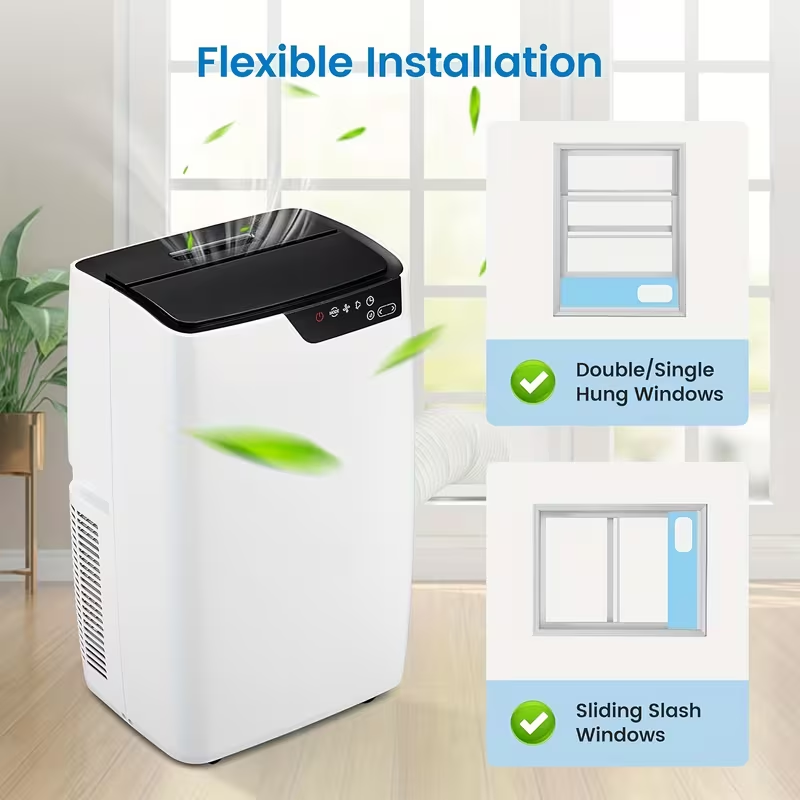
Installation and maintenance are crucial for maintaining optimal efficiency and prolonging the lifespan of a portable air conditioner. Most units require a window kit for ventilation, which allows the hot air exhausted from the unit to exit outside while drawing in cooler air from the room. Proper placement near a window ensures effective cooling performance. Regarding maintenance, it is advisable to regularly clean or replace air filters to keep airflow unobstructed and performance steady. Moreover, periodic checks on the drainage system ensure that moisture does not accumulate, preventing potential issues.
the Portable Air Conditioner, 3in 1 Standing Cooling AC Unit
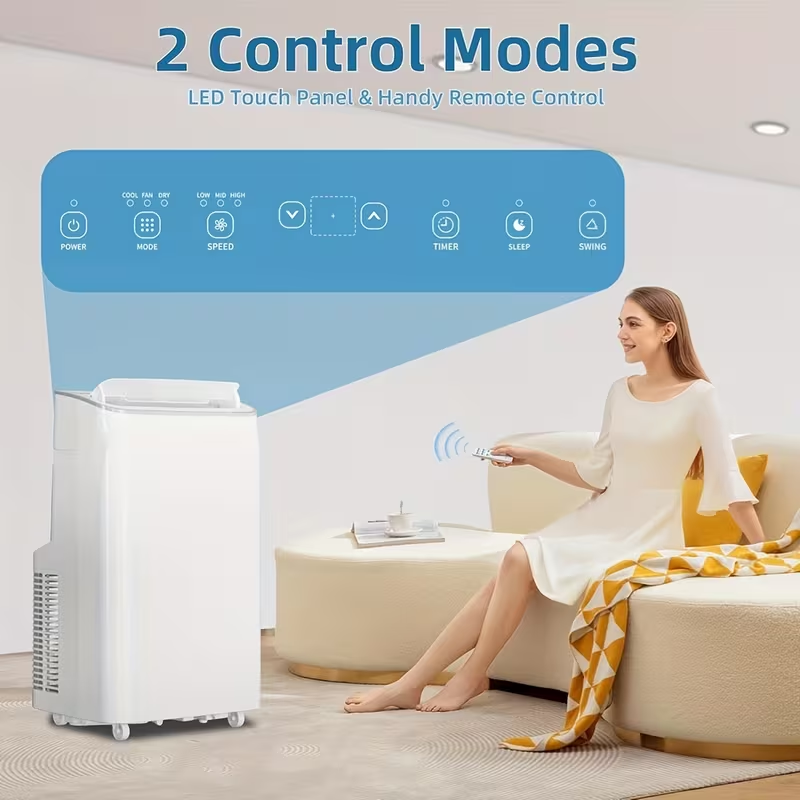
The 3-in-1 standing cooling air conditioning unit is designed to provide not only cooling but also energy-efficient dehumidification and fan functionality. This versatile unit boasts a cooling capacity of up to 12,000 BTUs, making it well-suited for medium to large rooms. With an EER (Energy Efficiency Ratio) of 11, it delivers energy savings while maintaining a comfortable indoor environment.
In terms of design, this air conditioner features a sleek, modern aesthetic with smooth curves and an intuitive control panel for easy operation. It stands approximately 34 inches tall, allowing it to blend into various interior styles seamlessly. Additionally, the unit is equipped with casters for mobility, making it simple to relocate between rooms as necessary.
For optimal performance, this AC unit is recommended for spaces of up to 450 square feet. Ideal use cases include living rooms, bedrooms, and home offices, where its versatile functions can provide year-round comfort. With its combination of cooling, dehumidifying, and fan options, users can effectively tailor the environmental conditions to their preferences.
Advanced Portable Air Conditioner with Dehumidifier and Fan Mode
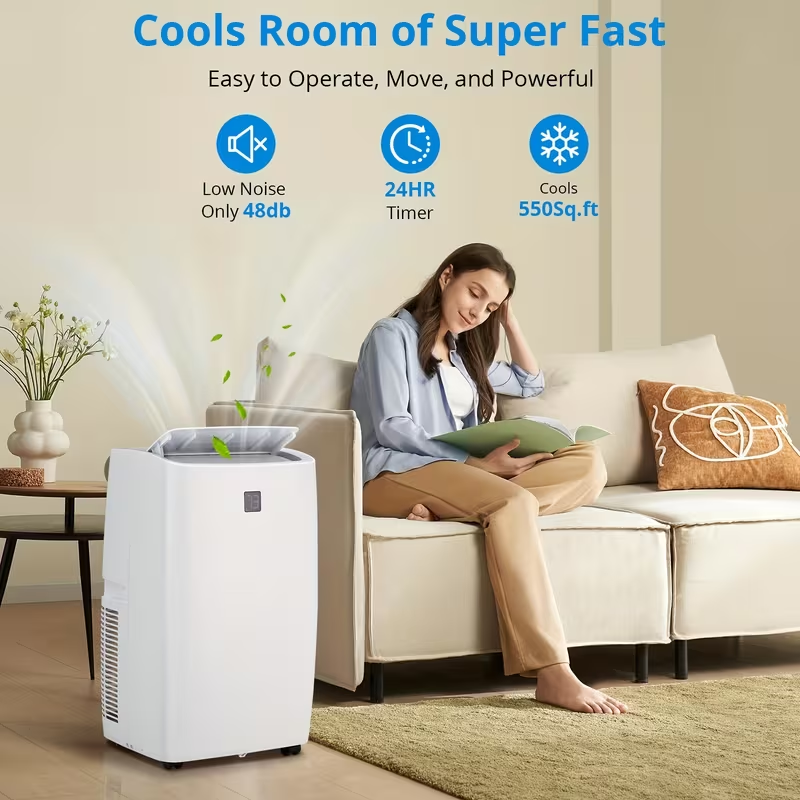
The advanced portable air conditioner with dehumidifier is engineered to maximize comfort for users in diverse climates. Featuring an impressive cooling capacity of 14,000 BTUs, this unit is perfect for larger areas and provides quick cooling relief during peak heat. Its energy-efficient design, with an EER of 12, ensures lower electricity bills without sacrificing performance.
This unit combines state-of-the-art design with functionality, boasting an elegant finish and a compact footprint, making it easy to fit into various home settings. Weighing approximately 70 pounds and featuring an extendable window exhaust kit, it can be conveniently set up and transported, ensuring flexibility in use.
Best suited for spaces up to 600 square feet, this air conditioner shines in high-humidity environments, as it effectively removes excess moisture while cooling the air. This makes it an ideal choice for basements or areas prone to dampness. Customers who prioritize energy efficiency alongside powerful cooling will find that this option meets and exceeds expectations.
the Portable Air Conditioner, 3-in-1 Air Conditioner
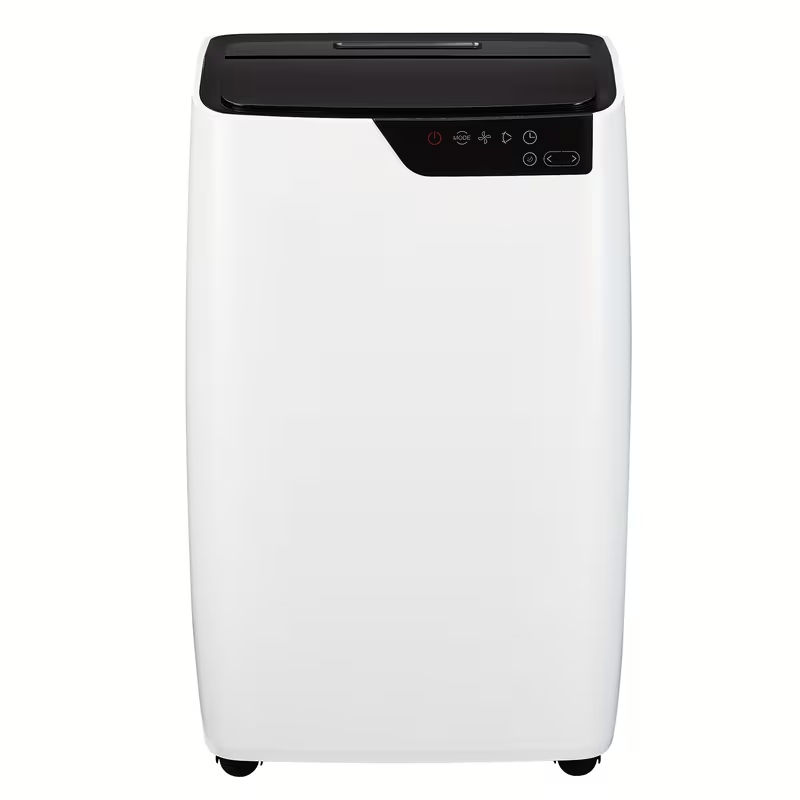
The portable 3-in-1 air conditioner stands out as a multifunctional unit that provides cooling, heating, and dehumidification—all in one. With a robust 10,000 BTU cooling capacity, it remains a viable choice for smaller to medium-sized rooms while ensuring year-round utility. Its energy-saving functions promote efficiency, reflected in its good EER ratings.
Designed for practicality, this air conditioner features an appealing, compact design that easily fits into tight spaces. It weighs about 50 pounds, providing a good balance between lightweight portability and structural durability. The unit includes a programmable timer, allowing the user to set cooling schedules to optimize energy use.
Optimal for spaces up to 400 square feet, this versatile air conditioner is perfect for bedrooms, offices, or RVs. With its integrated heating capabilities, users can maximize utility with a single device, making it a smart investment for diverse climate conditions. Ultimately, this unit satisfies consumer needs for adaptability, efficiency, and comfort.
Buying Guide for Portable Air Conditioners: What to Considering
When purchasing a portable air conditioner, it’s crucial to evaluate several factors to ensure you select a unit that meets your cooling requirements efficiently. One of the primary considerations is the BTU (British Thermal Unit) rating. This rating reflects the unit’s cooling capacity—the higher the BTU rating, the larger the space the air conditioner can effectively cool. For instance, if you plan to cool a small room, a unit with a BTU rating between 8,000 to 10,000 may be sufficient, whereas larger spaces might require units rated above 12,000 BTUs.
Energy efficiency is another critical aspect, often indicated by the Energy Efficiency Ratio (EER) or Seasonal Energy Efficiency Ratio (SEER). Choosing an air conditioner with a higher EER or SEER rating could lead to significant savings on your energy bills over time. Look for units that are Energy Star certified, as they tend to operate more efficiently while offering reliable performance.
Noise levels produced by portable air conditioners can vary significantly. Generally, models operate within a range of 50 to 70 decibels. A quieter unit is preferable, especially for bedrooms or offices where disturbances can be problematic. Be sure to check customer reviews for insights on the actual noise levels experienced during operation.
Functionality is another factor to consider; many portable air conditioners come with additional features such as dehumidification, heating, and programmable timers. This flexibility allows them to be utilized year-round, enhancing their value. Furthermore, brand reputation can greatly influence reliability and customer satisfaction. Established and reputable brands often provide better customer service and warranty options.
Ultimately, balancing the performance, ease of use, and flexibility against your specific needs and budget will guide you towards the most suitable portable air conditioner. By considering these factors, customers can make an informed decision tailored to their distinct requirements.