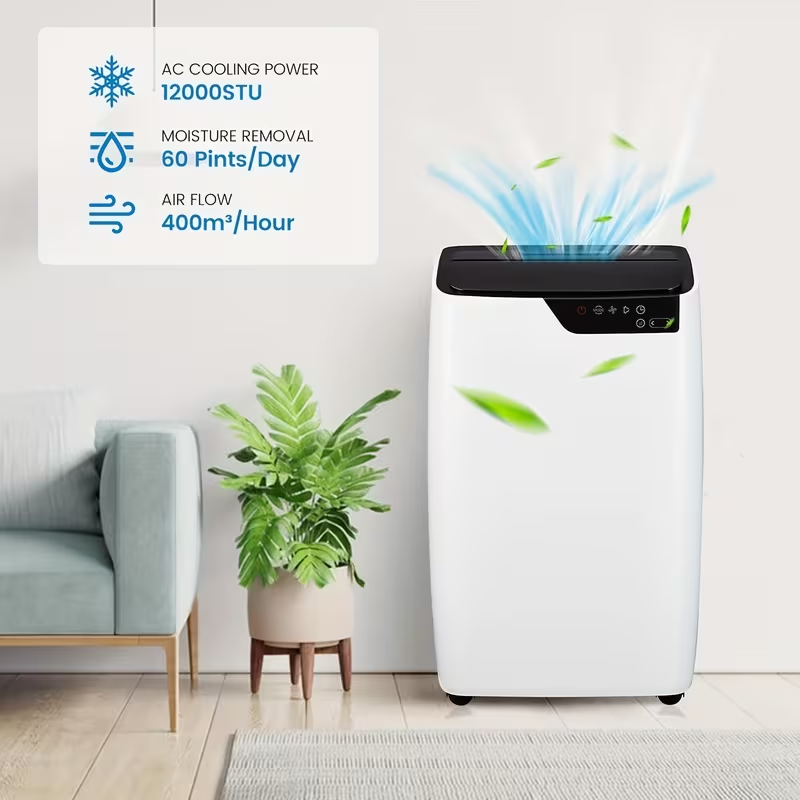
Introduction: Understanding Portable Air Conditioners
In recent years, portable air conditioners have emerged as an increasingly popular solution for those seeking effective and flexible cooling options. These units are self-contained systems that can be moved from one room to another, making them particularly attractive to individuals living in apartments, dormitories, or smaller homes. Unlike traditional window-mounted air conditioning units, portable air conditioners can easily adapt to different living situations, providing a versatile cooling solution.
The convenience offered by portable air conditioners is one of the primary reasons for their growing appeal. They require no permanent installation, which means that users can take them with them when moving or adjust their location depending on the season or preference. When placed strategically, these units can efficiently cool specific areas, providing comfort where it is most needed. Furthermore, many modern models are designed with advanced features such as programmable timers, remote controls, and energy-saving modes, enhancing their functionality and user-friendliness.
Another factor contributing to the popularity of portable air conditioners is their suitability for various environments, including homes, offices, and even temporary settings like event spaces. The ability to create a comfortable climate in any room makes them an appealing choice for diverse consumers. Additionally, the recent focus on energy efficiency has led to the development of portable air conditioners that use less energy compared to conventional cooling methods. This reinforces their position as a practical choice for environmentally conscious individuals.
As we delve deeper into the world of portable air conditioners, it is crucial to understand their features, benefits, and considerations to make informed decisions when purchasing and using these cooling devices. This guide will help readers navigate through the various aspects of portable air conditioning, ensuring a well-rounded understanding of these valuable appliances.
Understanding the Mechanics of Portable Air Conditioners
Portable air conditioners operate through a series of coordinated components that work together to cool and dehumidify indoor spaces. At the heart of these units is the compressor, which plays a crucial role in the refrigeration process. The compressor compresses a refrigerant gas, increasing its pressure and temperature.
Once compressed, the hot gas moves to the condenser. In this stage, the refrigerant releases heat into the surrounding air, allowing it to condense into a high-pressure liquid. The condenser typically features fans that help facilitate airflow, ensuring efficient heat exchange. This process is vital, as it enables the refrigerant to cool down before proceeding to the next phase.
The cooled, high-pressure liquid then travels to the evaporator coil. Here, the refrigerant undergoes a phase change, evaporating into a gas as it absorbs heat from the indoor air. This is where the cooling effect occurs; as the refrigerant absorbs heat, the air circulating around the evaporator coil is chilled and released back into the room through a fan. This fan not only pushes the cooled air out but also aids in the evaporation process.
Another important aspect of portable air conditioners is their ability to dehumidify indoor air. As the evaporator coil cools the air, moisture condenses on the coil’s surface and is collected in a reservoir or drained away. This dehumidification not only enhances comfort but also helps prevent mold and mildew growth in indoor environments.
In summary, the operation of portable air conditioners is a symbiotic relationship between the compressor, condenser, evaporator, and fan, all working in unison to provide effective cooling and dehumidification, thereby improving indoor air quality and comfort.
Benefits of Using Portable Air Conditioners
Portable air conditioners have become increasingly popular due to their unique advantages, particularly in situations where traditional, central air conditioning systems may not be practical. One of the primary benefits of these units is their ability to provide rapid cooling in specific areas, allowing users to create a comfortable environment without having to cool the entire home. This localized cooling is especially advantageous for individuals who spend most of their time in a single room or who wish to cool only specific spaces, thus enhancing comfort while minimizing energy costs.
Another significant advantage of portable air conditioners is their ease of installation. Unlike traditional air conditioning systems that often require complex setups and professional installation, portable units can be easily moved from one location to another, making them ideal for renters and those with limited space. Most portable air conditioners come with simple setup instructions and require minimal tools for installation, often just needing a venting kit that fits through a window. This means that users can quickly set up the unit and enjoy immediate cooling relief.
Additionally, portable air conditioners can contribute to energy savings compared to central air conditioning systems. By allowing users to cool only the spaces in use, these units reduce the overall energy consumption, as they do not necessitate cooling larger areas unnecessarily. Many models also incorporate energy-efficient technologies, providing an eco-friendly alternative for those looking to lower their utility bills without sacrificing comfort. Consequently, portable air conditioners present a versatile cooling solution for various living situations, contributing to both conveniences as well as potential financial savings.
Product Review: the Portable Air Conditioner, 3in 1 Standing Cooling AC Unit
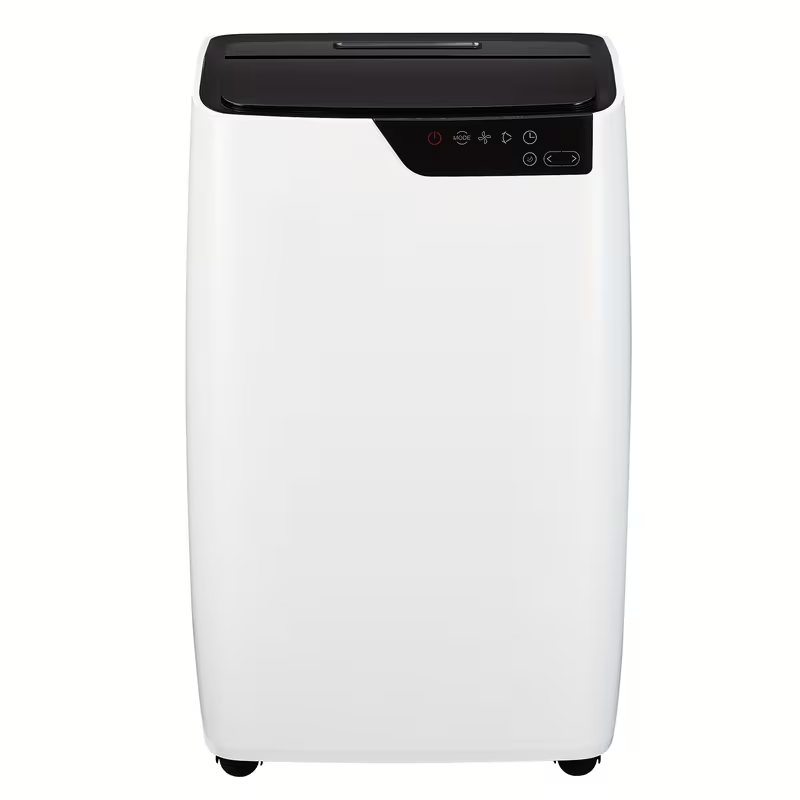
The Portable 3-in-1 Standing Cooling AC Unit is designed to provide efficient temperature control and optimal indoor comfort. This versatile unit not only functions as an air conditioner but also includes a fan and a dehumidifier, making it an invaluable addition to any home or office space. With a cooling capacity of up to 12,000 BTU, it is ideally suited for medium-sized rooms measuring up to 400 square feet, ensuring a comfortable environment even during the hottest months.
One of the standout features of this portable air conditioner is its user-friendly design. The unit is equipped with an intuitive digital display and a remote control, allowing users to adjust temperature settings or switch modes without leaving their seat. In addition, it boasts a sleek, modern aesthetic, easily integrating into various interior styles while maintaining a compact footprint. The lightweight construction and built-in caster wheels enhance portability, enabling users to move it effortlessly from room to room.
Alongside its cooling capabilities, the unit also excels in dehumidification, effectively removing excess moisture from the air. This crucial feature helps improve indoor air quality, particularly in humid climates, by preventing mold growth and reducing allergens. Users have reported satisfactory performance in maintaining optimal humidity levels, contributing to overall comfort.
User feedback highlights the AC unit’s effectiveness in providing relief from high temperatures. Many have noted its quiet operation, which allows for uninterrupted activities, such as working or sleeping. With multiple fan speeds, users can easily tailor airflow to their preferences. Overall, the Portable 3-in-1 Standing Cooling AC Unit emerges as a reliable choice for those seeking a flexible and efficient cooling solution for various applications, including residential and office use.
Product Review: Advanced Portable Air Conditioner with Dehumidifier and Fan Mode
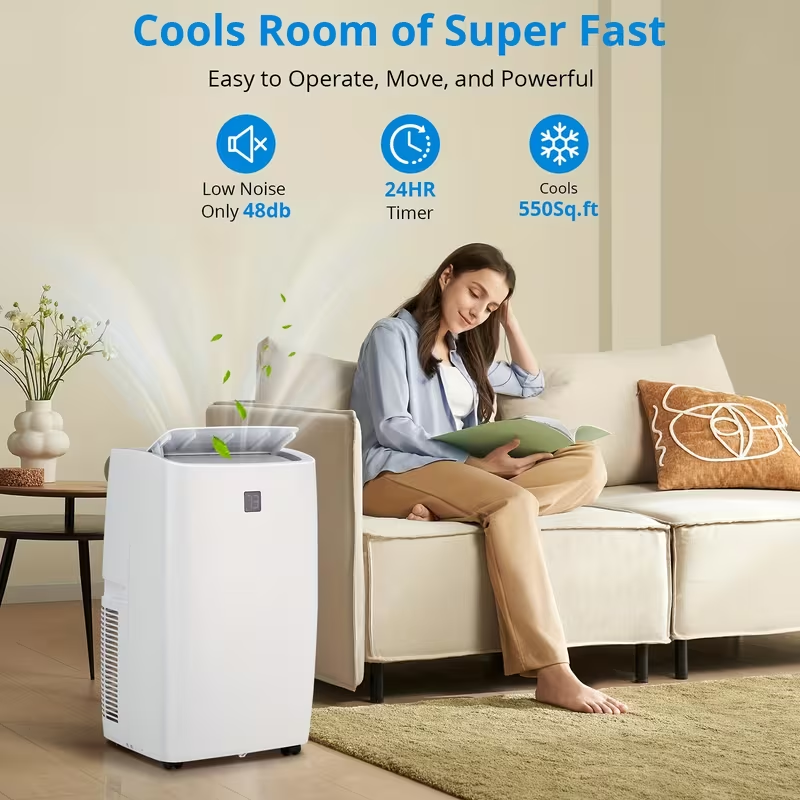
The Advanced Portable Air Conditioner is a versatile solution for personal cooling needs, particularly in regions experiencing high humidity. This model is not only an air conditioner but also features a built-in dehumidifier and fan mode, making it a comprehensive climate control unit for varying weather conditions.
One standout aspect of the Advanced model is its multi-functionality. When used as an air conditioner, it effectively cools spaces of up to 400 square feet, providing a refreshing escape from the heat during summer months. The cooling power is often quantified by its BTU (British Thermal Units) rating, and this unit boasts an impressive BTU rating that guarantees efficient cooling performance. Users can configure the settings to match their specific cooling requirements, which adds to its overall functionality.
In terms of design, the Advanced Portable Air Conditioner is compact and aesthetically pleasing, integrating seamlessly into any room environment. The unit features easy-to-use electronic controls along with a remote, ensuring accessibility even from a distance. Additionally, its lightweight design enhances its portability, allowing users to easily move it from one room to another—invaluable for those who require flexible cooling across different spaces.
Moreover, this model excels in its dehumidifying capabilities, effectively removing excess moisture from the air while cooling. This dual functionality results in a more comfortable indoor atmosphere, particularly useful in humid climates. The fan mode offers airflow without cooling, perfect for transitional weather when temperatures are moderate but humidity levels remain high.
In conclusion, the Advanced Portable Air Conditioner presents an ideal option for consumers looking for a versatile cooling solution. With its cooling performance, dehumidification feature, and portability, it is well-suited for various environments, from home offices to bedrooms, enhancing comfort and air quality throughout the day.
Product Review: the Portable Air Conditioner, 3-in-1 Air Conditioner
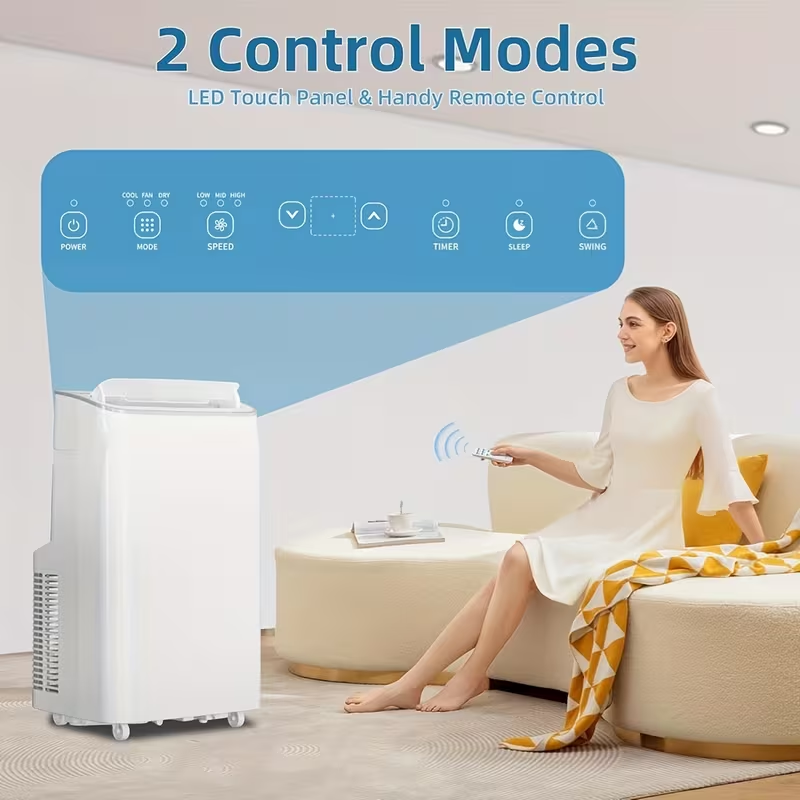
The Portable 3-in-1 Air Conditioner emerges as a versatile solution for combating heat in indoor environments. This unit combines cooling, dehumidifying, and fan functions, making it a multifaceted appliance for year-round comfort. Its cooling efficiency is particularly noteworthy, as the advanced technology allows it to rapidly reduce ambient temperatures, ideal for hot summer days. The cooling capacity is rated at a significant BTU, suitable for medium-sized rooms, ensuring that users can enjoy a comfortable atmosphere without excessive energy consumption.
In addition to its cooling capabilities, the dehumidifying function effectively removes excess moisture from the air. This can be especially beneficial in humid climates where high humidity can lead to discomfort and potential health risks. Users can benefit from improved indoor air quality, promoting a healthier living space. The fan function provides additional airflow options, allowing users to circulate air on milder days or use the air conditioner without cooling, which enhances its overall versatility.
Design and portability are critical factors for buyers considering a portable air conditioning unit. The Portable 3-in-1 model features a compact design that blends seamlessly into various home aesthetics. It typically includes caster wheels for easy maneuverability, making it simple to relocate the unit from one room to another as needed. This is particularly advantageous for users who may require cooling in different spaces throughout the day.
With an ideal room size capacity of approximately 300 square feet, this air conditioner can efficiently maintain comfort in bedrooms, living rooms, or home offices. In conclusion, the Portable 3-in-1 Air Conditioner stands out for its combination of cooling efficiency, dehumidifying capabilities, and fan functions, making it a recommended choice for those seeking a practical cooling solution.
Comparative Analysis of the Three Products
The market for portable air conditioners has expanded significantly, with various models catering to a multitude of needs. In this analysis, we will examine three leading products based on performance, flexibility, and ease of use, enabling consumers to select the most suitable option for their particular requirements.
First, we have Product A, which is notable for its impressive cooling efficiency. This unit operates quietly, making it ideal for bedrooms or workspaces. Its energy consumption is relatively low, offering an excellent balance between performance and efficiency. Furthermore, Product A features a user-friendly digital interface, allowing for simple temperature adjustments and mode selections. The lightweight design enhances its portability, making it easy to move from room to room.
Next is Product B, which distinguishes itself with its versatility. This air conditioner not only cools but can also function as a dehumidifier and fan, providing year-round comfort. Its capacity to serve multiple purposes appeals to users living in humid climates, where moisture removal is essential. While its noise levels are somewhat higher than that of Product A, many users find the performance more than compensates for this minor inconvenience. Moreover, the remote control functionality allows for added convenience, as users can operate it from across the room.
Finally, Product C stands out for its budget-friendliness without compromising core features. While it may lack some advanced functions like smart connectivity, it remains an efficient cooling solution suitable for smaller spaces. The simplicity of its setup and operation not only attracts first-time users but also makes it a solid choice for those requiring a reliable, easy-to-use air conditioner. In summary, while Product A excels in cooling and quietness, Product B offers multifaceted functionality, and Product C emphasizes affordability, each product caters to distinct user preferences.
Pros and Cons of Each Product
When considering portable air conditioners, examining the pros and cons can greatly aid in making an informed decision. Below, we analyze a selection of popular models, outlining their strengths and weaknesses.
Model A: The Efficient Performer
Pros: Model A is frequently praised for its energy efficiency, which translates into lower utility bills during peak summer months. It features a compact design that allows for easy transport and installation, making it suitable for various spaces. Additionally, the built-in dehumidifier function effectively reduces humidity levels, enhancing overall comfort.
Cons: However, users have reported that the noise level can be higher than anticipated during operation, which may be a nuisance for those seeking a quiet environment. Furthermore, some customers have noted that while it excels in smaller rooms, it may struggle to cool larger spaces effectively.
Model B: The Budget-Friendly Option
Pros: Model B is celebrated for its affordability, making it accessible for consumers on a tight budget. It also boasts a simple interface that is user-friendly, appealing to individuals who may not be tech-savvy. The unit is lightweight, ensuring ease of movement, and it includes basic features such as adjustable speed settings.
Cons: Conversely, the lack of advanced features can be a drawback, as it may not offer functions like programmable timers or remote control operations. Additionally, its cooling efficiency may be limited, which can result in dissatisfaction during excessively hot days.
Model C: The Feature-Packed Choice
Pros: Model C stands out with its robust array of features, including multiple cooling settings, a programmable timer, and a remote control. This model is adept at cooling larger spaces, making it ideal for families or communal areas. Furthermore, its sleek design makes it a stylish addition to any room.
Cons: One notable downside is its higher price point, which may deter some potential buyers. Additionally, the more complex features could lead to a steeper learning curve for users. Some reviews also mention that it can be slightly heavier compared to other portable air conditioners, which may hinder mobility.
Each portable air conditioner has its unique advantages and disadvantages. By evaluating these aspects, consumers can make a more educated choice aligned with their specific needs and preferences.
Buying Guide: What to Consider Before Choosing a Portable Air Conditioner
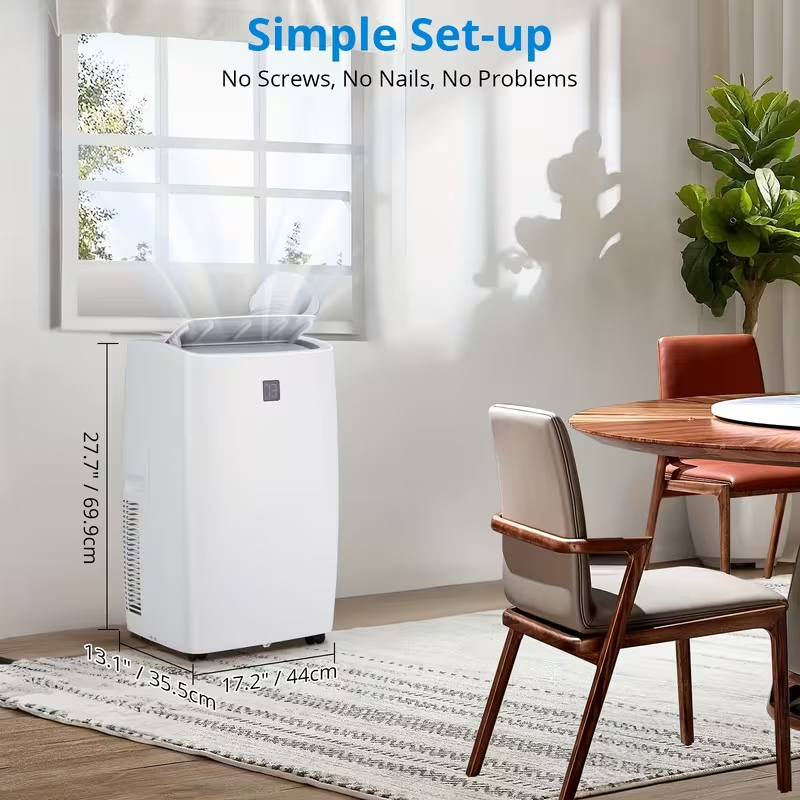
When choosing a portable air conditioner, several factors need careful consideration to ensure that you select a unit that best fits your needs. One crucial aspect is the cooling capacity, measured in British Thermal Units (BTUs). The cooling capacity of your portable air conditioner should generally match the size of the room you intend to cool. A unit with insufficient BTUs will struggle to regulate the temperature effectively, while one with excessive BTUs may overcool the area, leading to discomfort and higher energy bills.
Another important factor is the noise levels of the unit. Since portable air conditioners can vary significantly in terms of operational noise, it is advisable to look for models that entertain a lower decibel rating, especially if the unit will be used in bedrooms or study areas. Generally, a unit that operates at 60 decibels or less is considered relatively quiet.
Portability is also vital; thus, the weight and design of the unit should facilitate easy movement between rooms as needed. Look for features such as sturdy wheels and integrated handles to improve maneuverability. Additionally, the energy efficiency of the portable air conditioner should not be overlooked. Units with the Energy Star rating tend to result in lower electricity costs due to their efficient operation, making them more environmentally friendly options.
Furthermore, consider additional features that may enhance your user experience. These can include programmable thermostats, remote controls for effortless operation, and dehumidifying functions to improve indoor air quality. Some models also provide air purification options, further elevating their utility. By meticulously assessing these factors, buyers can make informed choices and invest in a portable air conditioner that meets their specific needs effectively.
Final Recommendation: Which Product is Best for Different User Needs
When selecting a portable air conditioner, it’s essential to consider various factors, including budget, room size, and desired features. By understanding these aspects, potential buyers can make informed decisions tailored to their specific needs.
For budget-conscious individuals, the BLACK+DECKER BPACT08WT model stands out as an excellent choice. Priced competitively, it provides reliable cooling for small to medium-sized rooms. With its decent energy efficiency rating, users can enjoy comfort without incurring high electricity bills, making it perfect for those who seek both affordability and quality.
For users requiring cooling for larger spaces, the Honeywell MN12CES> Portable Air Conditioner should be considered. This model boasts a powerful dual-hose system capable of cooling areas up to 400 square feet effectively. Despite its higher price point, it offers advanced features, including a built-in dehumidifier and a user-friendly digital display, catering to individuals who value both performance and convenience.
Moreover, environmentally conscious consumers may prefer the Whynter ARC-14S, known for its eco-friendly refrigerant and energy-efficient design. This model not only delivers strong performance in rooms up to 500 square feet but also minimizes its environmental impact, appealing to buyers interested in sustainability.
If specific features are essential to your decision, consider models like the Insignia NS-AC12PWH9, which includes smart technology for remote operation via smartphone. This feature is particularly beneficial to tech-savvy users who appreciate the convenience of controlling their air conditioner from anywhere.
.Thus, by evaluating individual needs against the strengths of various models, potential buyers can select the best portable air conditioner to suit their unique circumstances. Each recommendation offers a blend of performance, efficiency, and value to accommodate diverse preferences, ensuring satisfactory cooling experiences.